Thursday, July 11, 2013

A World Lit Only By Fire


One of the summer reading choices is William Manchester's A World Lit Only By Fire, an informal history of the end of the Middle Ages in Europe and the beginning of the Renaissance. The basic thesis of Manchester's book is that the medieval mindset of Europe was shattered by several events that occurred around the the year 1500. The events he describes, the decline of the Roman Church, the advent of humanist thought, the increasing power of the "New Monarchies," and the circumnavigation of the Earth by Magellan and his crew, are presented as the keys to the formation of the modern mindset and very clear break with the Middle Ages. In the introduction to his book, Manchester admits that, while he was not completely unfamiliar with the world of the early sixteenth century, it was not ground that he had often trod upon. In fact, Manchester is better known as a 20th-century historian, having written books on John F. Kennedy, Douglas MacArthur, and Winston Churchill. This is why he had his work reviewed by James Boyden, "an authority on the sixteenth century." However, we must still be very careful when reading Manchester. While he did get many things right, he still got much of it wrong.

I know what you're thinking. "How in the world can you say that?! Why would you have us read a book that is wrong?!" No need to panic. Like I said, Manchester did get some things right. His claim that these events that occurred between 1450 and 1550 DID have a profound impact on the way that Europeans thought about themselves and the world around them. These are only some of the events that historians identify as those things which led to the development of the modern world. What Manchester gets wrong, in the judgement of myself and that of many current historians, is the scale of this change. Manchester presents the world of Medieval Europe as a "dim era." He makes the claim that "Intellectual life had vanished from Europe," using the illiteracy of Charlemagne to support this claim. He paints a picture of a dark age of "incessant warfare, corruption, lawlessness, obsession with strange myths, and an almost impenetrable mindlessness. It's very easy for us to sit back from the comfort and pass judgement on people who lived from 1,500 to 650 years ago. We can travel around the world in a matter of hours. Information travels even faster! An era when it may have taken months to travel from one side of Europe to the other, and books were a precious and incredibly expensive commodity may, indeed, seem a bit dark to those of us living in the information age. Unfortunately, modern historical research has discredited this view of the Middle Ages as a Dark Age. In fact, historians haven't really held this belief since the 1920s and 30s.


Students at a medieval university; Is that guy in green texting?!

Just like any era in history, the Middle Ages in Europe were far more complex then many people give them credit for. Learning and intellectual life was not unknown to the Europeans of the Middle Ages. While formal education was not nearly as widespread as it is today, the monasteries and universities of Europe were lively centers of education and debate. Theology was the major subject of intellectual inquiry, but the traditional liberal arts (The trivium of grammar, rhetoric, and logic and the quadrivium of arithmetic, geometry, astronomy, and music) formed the foundation of education at medieval universities. The learning of the Classical Era did not die during the Middle Ages, either. It was being preserved in the Latin manuscripts copied in the monasteries of Europe and in the Arabic transcriptions of the Greek classics by Muslims in Spain and the Middle East. The 15th century would see the rapid "rediscovery" of these classical works described by Manchester.

"To what extent is the term 'Renaissance' a valid concept for a distinct period in early modern European history?" This is one of the first questions we tackle at the beginning of the year in class. It's really just a very academic way of asking what made the Renaissance the Renaissance, and is it really so different from the era that came before. As we get a broader picture of what the Later Middle Ages was like, and a more comprehensive view of the Renaissance, we will find more continuity between the two than is presented in Manchester. That's the beauty of history; it's an ongoing conversation and debate.

On a side note: Manchester is a bit obsessive in his coverage of Magellan. He devotes one third of the book to his historic voyage. The only thing you really need to come away with is that Magellan's voyage provided confirmation of the spherical nature of the Earth. While this is something that many had already assumed (Otherwise, why would you sail west hoping to reach the east?), it did have the effect of changing the way we thought about the nature of the universe that would impact the Scientific Revolution of the following century.

As always, you can use the comments section or email me to ask any questions.

Tuesday, July 2, 2013

Big Idea: Realism vs. Nominalism


Some of you may have chosen to read Sophie's World by Jostein Gaarder for the summer reading. This book is very different than the other two choices on our list. The most obvious difference is that it is a novel instead of a traditional work of history. The novel is part mystery (Who is the philosopher? Who is Hilde? Who is Albert Knag, and what does he want with Sophie?) and it is part history of western philosophy. Of course, for our purposes, we are more interested in this novel as a history of philosophy. Gaarder does a very good job of making western philosophy more accessible to younger readers by wrapping it in the narrative of Sophie and the Philosopher. Pay close attention to the big ideas presented by the Philosopher in his lessons and the effect those ideas have on the world in which Sophie lives. It is these big ideas with which we should concern ourselves.

In our survey of modern European history this year we will be studying the history of ideas. Many students struggle with these ideas (especially when we get to the 19th century -isms). We added Sophie's World to the list of reading many years ago precisely because it deals only with ideas. One way to help understand the big ideas in the history of philosophy is to develop an understanding of the major themes in philosophy and some of the major conflicts. Every era likes to pretend that it has invented some great new idea or philosophical thread. On closer inspection, what seems like something new and revolutionary turns out to be a variation on a theme that sometimes can be traced back to the ancient Greeks. Einstein's search for a unified field theory can (as an idea) be traced back to Thales of Miletus, who postulated a theory of the universe as far back as 600 B.C.E. He believed that everything in the universe was tied together by water as the basic element. Even teachers haven't really invented anything new. We still use the basic question-and-answer technique to lead our students to understanding that was developed by Socrates in the 5th century B.C.E. (the Socratic Method). So, it should come as no surprise to see the same basic idea come and go throughout history.


Detail from The School of Athens by Raphael (1509 - 1511)

To give you a little bit of help with Sophie's World, I will briefly introduce you to one of the biggest conflicts in philosophical history; the problem of universals. In the 12th century C.E. (A.D. for most of you), the problem of universals was a major issue for many theologians at the universities of Europe. The basic problem was actually the nature of reality. What constitutes reality? What is "real"? These theologians (people who study God's attributes and relation to the Universe) were divided into two camps that directly reflected the earlier schools of Plato and Aristotle, the Ancient Greek philosophers. Take a close look at the picture above. It's a detail from The School of Athens by the Renaissance painter Raphael (We'll learn more about him later this year.). In this giant fresco located in the Apostolic Palace at the Vatican, Raphael places images of Plato and Aristotle arguing about the nature of reality in the center of figures representing philosophy and the liberal arts. Raphael envisioned philosophy as the search for causes of knowledge, and identified this conflict between Plato and Aristotle as the root of this search.

So what? What were these big ideas that Plato and Aristotle have? How are they related to the "problem of universals" in the 12th century? Some of these arguing theologians took the position of Plato (the guy on the left). They claimed that the physical objects that surround us (rocks, trees, horses, etc.) are not real. They are simply the physical manifestations of universal ideas (ideals, "rockness", "treeness", "horseness", etc.) that reside in the mind of God. Plato called this the world of ideals. To him, we were all imperfect reflections of ideal forms that existed in this ideal world. We are nothing more than shadows cast on the wall. All knowledge comes from this world of ideals. That's why Plato is pointing to the heavens in the painting. To these 12th century theologians that means that every thought, every bit of knowledge that enters your mind has been planted there by God. One can only arrive at the truth by examining these universals. These theologians were known as realists

The other camp took the position of Aristotle in the argument. They believed that the objects around us (those same rocks, trees, horses, etc.) constitute reality. If you've ever had an unfortunate encounter with a rock, tree, or horse, you probably see their point (ouch!). Just like Aristotle, they believed that universal ideas and concepts were simply names that we have applied to these things in the world. In other words, ideas come from the world around us through the application of human reason (which is a gift from God). One can only arrive at the truth by examining the objects and the world around us. This is why Aristotle is motioning to the world under the heavens in the painting. Adherents of this way of thinking were known as nominalists (from the Latin word nomina; name).

Now, get a load of this! Fast forward 500 years to the 17th century and the foundations of the Scientific Revolution. Two distinct modes of thinking and discovering "the truth" about the world developed. The first of these ideas claimed that the world of the senses was illusory and the only way that one could reach the truth was through the application of deductive reasoning. Deductive reasoning is a process that arrives at conclusions from a set of premises. In this case, these premises came from the examination of universal truths through the application of human reason. For example; all cats are animals; this is a cat; therefore, this is an animal. The most basic truth of all was the starting point for the major proponent of this way of thinking, Rene Descartes: I think, therefore, I am. The second way of thinking, known as inductive reasoning, was advocated by Francis Bacon. According to Bacon, the whole of human knowledge comes from observing the world around us, and then applying human reason to what we have observed. For example; every polar bear we have ever seen is white; therefore, all polar bears are white. This would have to be verified by further observation. While these may seem like new ideas, they are really a variation on the Plato (realists/deductive reasoning) vs. Aristotle (nominalists/inductive reasoning) argument. 

If you are reading Sophie's World this summer, look for these big ideas and how they affect the way in which Sophie perceives the world around her. If I have confused you, or you have questions about the other books feel free to send me an e-mail, or use the comments section below.

Monday, June 24, 2013

Look for the "Big Idea"

The most difficult thing for most AP Euro students to grasp in the first term of the course has to be the reading. The textbook we use, Western Civilization by Jackson J. Spielvogel, uses a very narrative style that is a bit easier for most high school students to read. However, it is still a college text book. The vocabulary used in the book is intended for college-aged readers, just out of the reach of your average high-school sophomore. You will also encounter a more sophisticated style of writing when we get into the primary sources throughout the year. Don't get discouraged if you don't understand a few words, and don't just read past them. You live in the age of insanely instantaneous gratification. Use the Internet for something more than sending stupid pictures to your friends on Snapchat! Look up those words on Dictionary.com (It's an app too!).  I know it's a lot of work to look up new words (sarcasm... a bit), but you will be much better off if you actually understand what you read. After all, you signed up for this class to stretch your mind.

This course will ask you to stretch your mind by changing the way you think about history, as well. In my first post I mentioned that many people look at history as a collection of dead people, events, dates, and facts to be memorized. I think that is why many people claim to hate history, do poorly in history courses, and show very little interest in history beyond the occasional Band of Brothers marathon on the History Channel (We won't concern ourselves with the appropriateness of this name right now). What they miss out on is the glue that holds all of those dates, people, events, and facts together. They miss out on the connections between events and other events. They fail to concern themselves with the connections between ideas and events, or ideas and other ideas. That's the good stuff! That's the stuff that makes history work! It's also the stuff that will help you to make sense of the past, and allow you to better remember the details.

I'll use an example from the 14th century (Chapter 11 in our text) to illustrate some "big idea" thinking.

The really big idea that sums up the 14th century is that it was a major disaster for European civilization. Actually, the 14th century saw three major disasters; famine and plague, the Hundred Years' War, and series a crises in the Roman Catholic Church. As students of history we should be concerned with finding cause and effect relationships within these three disasters. It's important to remember that all things are connected. Let's look at the example of the the first of these disasters, the Black Death.


A doctor treats victims of the Bubonic Plague (From the Toggenburg Bible, 1401)

Thanks to the modern science of biology, we now know that the Black Death was caused by a nasty bacterium called Yersinia Pestis that was transmitted by fleas on the backs of black rats. So what? Where did the rats come from? Why did they come in the 14th century? What was the effect of the Black Death on European society? The causes of the Black Death provide us with a great example of the cause-and-effect relationship of historical events. During the 13th century, the Mongols (Genghis Khan, his sons, and grandsons) conquered most of the Eurasian continent, from Poland and Hungary in the west to China in the east. In the process, they conquered the Persian Empire and tied the old Silk Road together under one empire. This unity further opened up the east-west trade routes, bringing about a medieval boom in trade that was dominated by the Italian cities of Venice and Genoa in the Mediterranean. It was along these trade routes that the black rats and their fleas hitched rides out of the steppes of Mongolia during the 14th century  into China and eventually Europe. So, Mongolian conquest and expanded trade in the 13th century eventually led to the Black Death and the loss of up to half of the European population.


Peasants working a lord's demesne (domain) in France (from the Très Riches Heures du Duc de Berry, 1412-16)
Now that we have dealt with the causes of the Black Death, we need to turn our attention to the consequences of this plague. The plague first struck between 1347 and 1351, and reoccurred every five to ten years until the end of the 15th century. The European population would not even begin to see a recovery until 1500, and it would take over a century to see the population levels close to those before the plague. The immediate result of this rapid depopulation was social upheaval and dislocation. Europe's economic and political system, the feudal system (Remember 7th grade?), was based upon a large population of peasants who were either tied to the land (serfs) or free peasants who paid rents to their landlords. When half of this labor force died, the labor they provided became a valuable commodity. In other words, they became much more expensive. They demanded, and got higher wages. The Black Death also accelerated the end of serfdom, which had already begun in the 13th century. The lack of labor and reduced population was bad news for the noble landowners. The reduced population also reduced the demand for their agricultural produce. They found their revenues also reduced by declining rents. In short, the Black Death raised the standard of living for the peasant survivors, but lowered the standard of living for the nobility who depended upon those peasants for their survival. Don't worry too much about the nobility. They survived peasant revolts in Flanders, France, and England in the second half of the century with their power intact. However, the upheavals after the Black Death in the 14th century were just the beginning of the kind of social conflict that characterized modern European history.

I know that seems like a lot of information, but it's not that bad if you focus on the big idea stuff. Here it is in a shortened form (notes):

Black Death (14th century):

  • Carried to Europe on trade routes from the east
  • first outbreak in mid-14th century
  • killed up to 50% of European population
  • social upheaval
    • labor shortage- accelerated end of serfdom
    • higher wages
    • lower prices
    • lower revenue from rents
    • high standard of living for peasants
    • lower standard of living for noble landowners
    • peasant revolts in Flanders, France, England
As you read your summer reading choice, try looking for the "big ideas." Look for the cause-and-effect relationships. Look for the "characteristics" of ideas, or "-isms." If you have any questions, feel free to leave them in the comments section below, or send me an e-mail message. Don't worry if you're struggling with any of this. It's the struggle that pushes us to become more than we are. Besides, we have the entire school year to work on it.

Tuesday, June 18, 2013

Welcome to AP Euro

Outside the gates of Versailles

Welcome to AP European History! I know it’s summer, but my hope is that you will choose to pick up one of the books on our recommended reading list and read a couple of chapters. Don’t worry, I am very realistic about the chances of this happening for everyone. It is summer, and this is Southern California. You should be outside soaking up some sun and enjoying the fact that you live in one of the best climates in the world. However, a key to success in high school (in life, really) is to develop a balance in your life. This means that you should not let your mind go idle over the break. That is the reason why we continue to encourage you to give the summer reading a shot, even though it is not a required assignment.


So, why is the summer reading no longer a required assignment? Well, there are a couple of reasons for this. The practical reason is that there are more teachers teaching AP European History at Westview than there were in earlier times. This course has become one of the more popular AP options for sophomores on this campus. We currently have four AP Euro teachers teaching seven sections of the course. That means approximately 300 or more students enrolled in the course! Traditional summer assignments usually come with written assignments. Trying to manage all of those assignments between four teachers, and trying to grade them before the beginning of the year is absolute madness! More importantly, requiring a summer assignment limits access to the course. Required summer assignments have been used as a way to thin the AP student herd before the course begins. Our goal at Westview has always been to open up access to rigorous AP courses to all students, and then to retain these students throughout the length of the course. Requiring a summer assignment seemed like one hurdle that should be removed.


So, what’s so important about the summer reading. Well, beyond keeping your mind sharp over the summer, the summer reading selections have been designed to give you a taste of “historical thinking” before you get dropped into an AP Euro classroom. Historians tend to think a bit differently about history than the rest of the population. Where most people think of history as just a collection of dates, dead people, events, and facts to memorize, historians see a series of patterns, trends, and relationships amongst the facts. Because history is based upon the written record left by past generations, the historian sees history as something to be interpreted and (most importantly) argued. The mind-numbing pile of facts are used to support the bigger idea being argued by the historian. It is not enough to memorize a pile of facts. You must learn to see these bigger ideas and patterns in history. This kind of thinking is something to which you must acclimate yourself. It does not come easily and will require patience. Yoda said it best; “You must unlearn what you have learned.” I will address this kind of thinking more in future blog posts.

That is enough for now. Follow my blog or follow me on twitter (@wvapeuro) for future updates. If you have questions, feel free to leave them in the comments section below.  Enjoy your summer.

Sunday, April 14, 2013

Decolonization & the French

1998 World Cup Champion French National Soccer Team

In recent years, the College Board has made an effort to expand its coverage of European history to include groups that don't fall into the historical mainstream. This includes more coverage of Jews in Europe, women, and, more recently, the millions of immigrants that arrived in Europe as a result of break up of European colonial empires and the labor shortages of the post-World-War-II era. These immigrants, in spite of their struggles within their new countries, have made an indellible impression upon the history and culture of Europe. The process of decolonization that took place after the Second World War seems to appear with increasing frequency in multiple-choice and essay questions, however, our textbooks don't really do great service to this important chapter of recent European history. I thought it might be a good idea to put the Cold War on the back burner for a little while and focus this blog post on a brief case study of one of the most destructive examples of decolonization; France and Algeria.

The Algerian War of 1954 to 1962 was so destructive and chaotic because of the special place that Algeria had within the French colonial empire. The French colonization of Algeria began with the occupation of the city of Algiers in 1830 (during the last days of the reign of Charles X). By 1834 the whole of Algeria became a French possession, and was rapidly settled French farmers. By 1848, the beginning of the 2nd Republic, there were well over 100,000 French settlers living in Algeria and the country was declared an integral part of France and politically integrated within the rest of the Republic. The late nineteenth century in Algeria saw increasing favoritism shown toward Algerians of European descent, known as pied-noirs, over the native Arab population of the territory. French citizenship was offered to pied-noirs and Jews, but not to Berbers or Arabs. French law allowed European settlers to purchase land that had been occupied by Arab farmers for centuries. By the end of the 19th century Europeans, who constituted aproximately 2 percent of the Algerian population, controled almost one third of the farmland in Algeria. This discrimination continued into the 20th century. Despite the contribution of almost 200,000 Algerian workers to the French war effort from 1914 to 1918, the French National Assembly rejected an Algerian Charter granting citizenship to Muslim Algerians who fought in the Great War.

After the Second World War, the cause of independence and self-determination took on a new importance in the colonial world. This war had been fought in the name of self-determination for the nations that had been conquered by the Axis powers from 1939 to 1945. The colonies of the European powers expected the same in return for their service and support during the war. The world after World War II was very different from the world in 1939. In place of the great European powers that dominated the world before the war were the two super powers of the United States and the Soviet Union. In this two-power world, the French saw themselves as a third great power. After all, they were the country of great monarchs, the Enlightenment, beautiful works of art. This attitude was reflected in their continued indifference to the demands of Algerian Muslims, who continued to demand equal treatment under the law after 1945. Downsizing their colonial empire to match the financial and political realities of the post-war world would come at a high price for the French. It would eventually lead to the downfall of the 4th Republic and a reorganization of the government.

The political failings of the 4th Republic were only exacerbated by the difficulties of maintaining a colonial empire in the 1950s. The unwillingness of the French government to make any concessions to the colonies only served to increase resistance to French imperialism around the world. In May of 1954, following the bloody Battle of Dien Bien Phu, the French began the withdrawal from Vietnam (French Indochina). In November of the same year, the FLN (Front de Liberation Nationale), the Algerian revolutionary group, launched attacks across Algeria and presented their demands and grievances to the the National Assembly, beginning a war that would last for 8 years and leave deep scars in the French political and economic landscape. The FLN launched a campaign of terror against Pied-noirs and Colons (French-Algerian farmers) throughout the 1950s, giving them the choice of "the suitcase or the coffin" (What a choice!). By 1958, a stalemate developed in the Algerian War that lead the French government to take desperate measures. French soldiers conducted house-to-house raids in Algeria that lead to the arrest and torture of many prisoners (water torture, electric shock, and mock drownings). Despite these drastic measures, the stalemate continued and the French government, without a strong executive, was hopelessly mired in debate without any solutions being offered. In 1958 they called for a return of Charles De Gaulle and gave him the power to restructure the French government in the hopes of ending the Algerian War.

In spite of his desires to see France retain her status as a world power, De Gaulle understood that the War in Algeria could not result in the continued political domination of France. Using the new powers granted to the President of the 5th Republic, De Gaulle announce plans to turn the task of governing Algeria over to the Algerians, essentially ending almost 130 years of direct rule from France. This plan for Algerian independence had to overcome the resistance of Pied-noirs and an attempted coup and campaign of terror by the OAS (Organisation de l'Armee Secrete), a counter-revolutionary group led by four French generals. A referrendum in April of 1962 secured the approval of the French people for De Gaulle's Evian Accords granting independence with French cooperation for Algeria. France very quickly became the destination for thousands of Pied-noirs and pro-French Algerians fleeing reprisals in Algeria. France was unprepared for this surge of immigration (almost one million people).

The echos of the Algerian War and decolonization can be heard in France today. In 2005, following the deaths of two North African teenagers in an incident with police, the northeastern suburbs of Paris erupted in violence. The riots in these mostly North African neighborhoods were fueled by the continuing problems of unemployment of young North Africans and the persistent poverty in their communities, and by claims of unacknowledged discrimination in the job market in France. The French government considers all French citizens to be French, and therefore equal under the law, and does not officially distinguish Algerian-French, or any other minority from the general population. Many minority groups in France claim that this allows discrimination in the job market to go unnoticed by the French government. This is an issue that France and many other European countries that invited the immigration of millions of "Guest Workers" will have to face as their populations continue to diversify.


Thursday, April 4, 2013

The Second World War and the AP Exam

American tanks enter Nürnberg in 1945

With as much time as we dedicate to World War II in our culture (Band of Brothers, Valkyrie, and every second not dedicated to Ice Road Truckers and Pawn Stars on the History Channel), you would think that it would be a bigger part of the AP European History exam. The truth is that it really hasn't ever loomed large as its own subject on the exam. Very few multiple-choice questions are dedicated solely to the war, and absolutely no essay questions have been designed around it. For us, to be honest, the topic might be too easy. After all, this is "our war," the one of which we are proudest, and the one we cannot stop reliving through film, television, and literature. The reality of the situation for a survey course like AP Euro is that the Second World War is the final chapter in a much bigger series of events that serves as the opening act of the twentieth century. UCLA's Eugen Weber referred to this period as a "second Thirty Years' War" that began with the assassination of the Archduke Franz Ferdinand in Sarajevo in 1914 and ended in 1945 with the dropping of the atomic bombs on Hiroshima and Nagasaki. Just as the first Thirty Years' War (1618-1648) had its various phases, and the Hundred Years' War (1337-1453) was made up a series of wars and relatively peaceful interludes, this second Thirty Year's War was marked by a first phase that finally ended the remaning vestiges of the Ancien Regime, a relatively peaceful interlude that saw Europe try to piece itself together in a new order, and a final catastrophic phase that saw the balance of power obliterated and ended European hegemony in the world.

Many of the causes of the Second World War can be traced back to the settlements made during the Versailles Peace Conference and the economic shockwaves caused by the end of the war in 1918. Many Germans were angry with the conditions of peace imposed upon them at Versailles. The felt that the terms of the treaty were harsh. The forced demilitarization of the Rhineland made many Germans feel vulnerable, at the mercy of a vengeful France. These feelings were amplified by the French occupation of the Ruhr Valley from 1923 to 1925. This occupation was the result of another term of the Versailles Treaty requiring the Germans to accept full responsibility for the Great War and to make full reparations for the damages and loss of life that resulted from the war. These reparations, totaling 132 marks (close to $33 billion in 1921), seemed extremely high and nearly impossible to pay to most Germans. The hyperinflation caused by the Weimar government in response to the French occupation ($1 = 4 trillion DM!) may have allowed German industrialists to wipe clean their foreign debts, but it absolutely destroyed the life savings of the German middle classes. The misery caused by the Great Depression in the years before the rise of the Nazi Party (1929-1932), when unemployment in Germany may have been as high as 35%, compounded the anger of the middle classes toward the democratic Weimar Republic. Adolf Hitler used this middle class anger to drive a wedge between the Weimar government and the middle classes, and to increase his own popularity by promising a recovery under National Socialism. He created a vision in which Germany was a weak, disarmed country surrouned by stronger enemies on every side. In this way, he gained the support of the German people in repudiating the Treaty of Versailles, rebuilding the German armed forces, and forcing territorial concessions from neigboring states (Austria & Czechoslovakia in 1938, Poland in 1939).

These are the kinds of connections that you should be able to make on the AP Exam in May. You should be able to identify the long-term causes of WW II, and the consequences of this new type of warfare that made the civilian populations that supported the armies of the warring nations the targets of aerial bombardments. Take a look at this sample multiple-choice question:

Which of the following resulted from the close relationship between science and government in industrialized nations during the Second World War?

(A) The pace of discovery and invention noticeably slowed.

(B) Specialization decreased.

(C) Much scientific research became financially dependent on military funding.

(D) Fewer students were interested in scientific training.

(E) The benefits of scientific advances were no longer questioned.

Notice this question, like most questions on the AP Exam, is conceptual in nature. It is not asking you to show specific knowledge, like who invented the atomic bomb. It is asking you to show your understanding of the consequences of a change in the role of governments that occured during the Second World War. So, if we think about this relationship between science and government in relation to the greatest scientific project of the war, the Manhattan Project (atomic bomb), we should be able to find the answer. First, let's eliminate the answer choices that we know to be incorrect. Answer choices A and C should be eliminated. After all, World War II came in the middle of the "heroic age of physics," when the pace of scientific education and discovery were on the rise. Answer choice B should also be eliminated. Specialization in industry and in science increased dramatically after the advent of the Second Industrial Revolution (Think of the assembly line). So, that leaves us with answer choices C and E. If we relate answer choice E to the horror and disgust that the world felt in the aftermath of the atomic bombs at Hiroshima and Nagasaki, then we are left with answer choice C. Scientific programs like the Manhattan Project and Hitler's Wunderwaffen (Wonder Weapons) were huge, and secret, military programs that stand as examples of the dependency of scientific research upon military funding during the war.

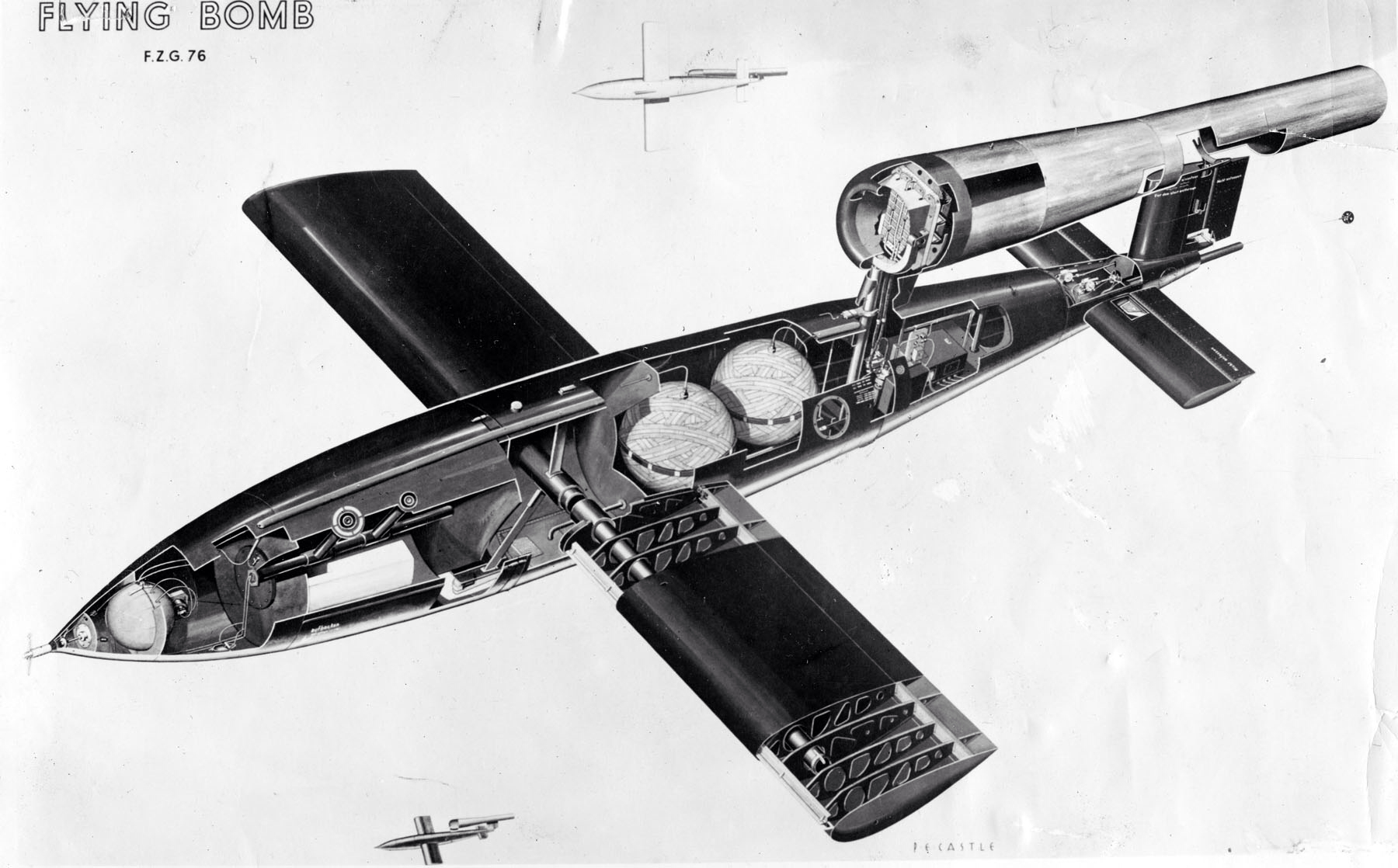
German V-1 Flying Bomb

Remember, the details make great concrete details in essays, but it's the big-picture ideas that will help you to construct stronger arguments and to understand the multiple-choice questions.


Tuesday, April 2, 2013

A Closer Look at Point-of-View: Part 2

So far, we have examined analyzing point-of-view (PoV) by relating the author's point of view to his or her place in society and by evaluating the reliability of a source. This time we will explore a couple of other methods of examining PoV in a DBQ.

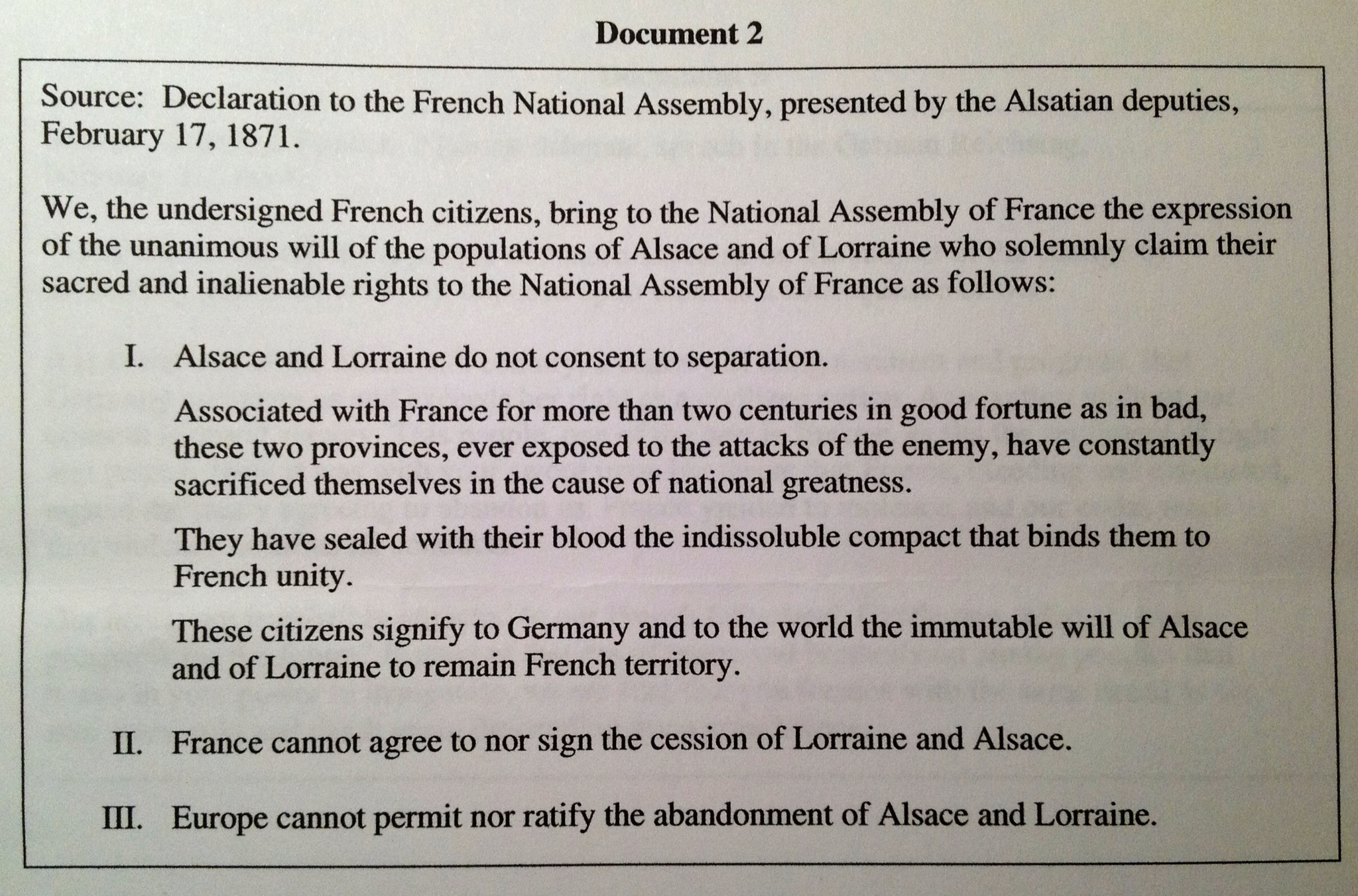
As you read and examine each document it is important to keep in mind that different types of documents serve different purposes. The purpose of a document may have a profound effect on the opinion (PoV) offered by the author. If the source happens to be a public lecture or speech, take note of the audience for the occasion. A speech to a democratic parliament and one given to a croud of protesters may have different purposes; one may be intended to arouse support for a cause, the other to stir people to direct action. A private journal may have a different purpose than a published memoir; the first records the daily thoughts and actions of the author, the other may be intended to create a favorable image of the author's involvment in the events it describes. Either way, the purpose of the document may have affected the author's PoV, and it is your job to connect these two things. Take a look at this example from Document 2 of the 2006 DBQ (Alsace-Lorraine).

Prompt: Analyze the ways in which the national and cultural identity in Alsace-Lorraine were percieved and promoted during the period from 1870 to 1919.

Example of Acceptable PoV:

"This declaration to the National Assembly of the nation from which they were being forcibly removed was intended to stir the defeated French to action to save these two territories and therefore makes the incredible claim to represent the "unanimous will" of Alsace and Lorraine."

This analysis of PoV does a good job of identifying the source of bias in the document and the effect it has upon the opinion given in the document. Is it reasonable for us to assume that this document unanimously represents the wishes of every citizen of Alsace and of Lorraine? Probably not. The clue to the bias in this document is the word "unanimous." Look for these all-encompasing words (everybody, all, none... etc.). They are usualy clues to some sort of hyperbole, or exaggeration of the situation. They are clues to the agenda of the speaker and the purpose of the document.

Example of Unacceptable PoV:

"Because this was written in a declaration to the French National Assembly by French citizens it is biased."

Why is this unacceptable? It clearly makes the statement that the document is biased. So, doesn't that automatically make it acceptable? No, not really. There is no analysis of the point-of-view offered by the document at all. It simply makes the statement that the document is biased because it was written by French citizens. This statement could be applied interchangeably to any document written by the citizens of France to their National Assembly. It doesn't make any attempt to explained why the authorship or the purpose of this particular document makes it a biased source.

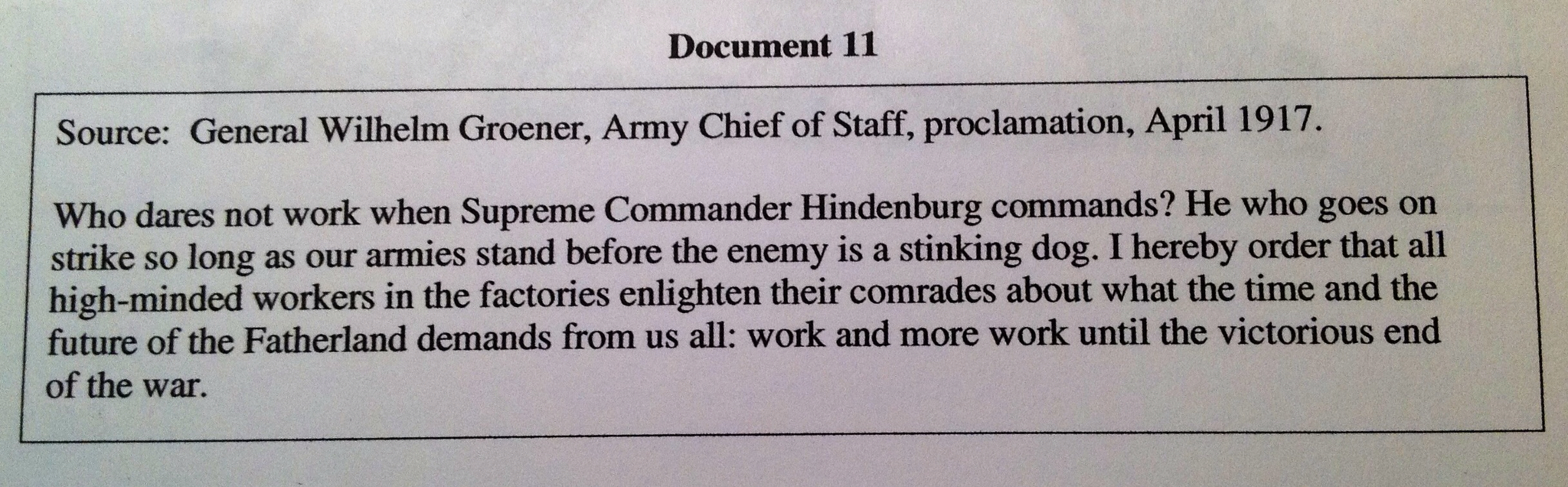
You may also choose to analyze the tone of a document. Some documents may be sarcastic in tone. Or. they may use highly inflammitory language. The tone of a document may indicate the purpose of the author. It is important to remember when analyzing PoV in this manner that it is not enough to simply point out the tone of the document. You must be able to connect that tone with a purpose. Take a look at this example from Document 11 of the 2003 DBQ (Burgfrieden):

Prompt: Describe and analyze changing views toward the concept of a "civil peace" (Burgfrieden) in Germany from 1914 to 1918.

"General Groener berated striking German workers who broke the civil peace as 'stinking dogs' in an attempt to induce other workers to pressure their comrades back into the factories."

This analysis of PoV does a good job of connecting the tone of the document to the intention of the General Groener. He "berated" the German workers in order to get other German workers to apply some good old-fashioned peer pressure. A good way to point out the tone of the document is to find a more exact way to say "he said" or "he stated." Check out page 39 of the AP Achiever for a great list of these "Tone Words," like "berated."

I'll leave the conversation about analyzing point-of-view here for now. The way to get better at writing DBQs is to practice writing them. In the next couple of week we will take some time to practice. Your next DBQ is scheduled for Tuesday 16 April.